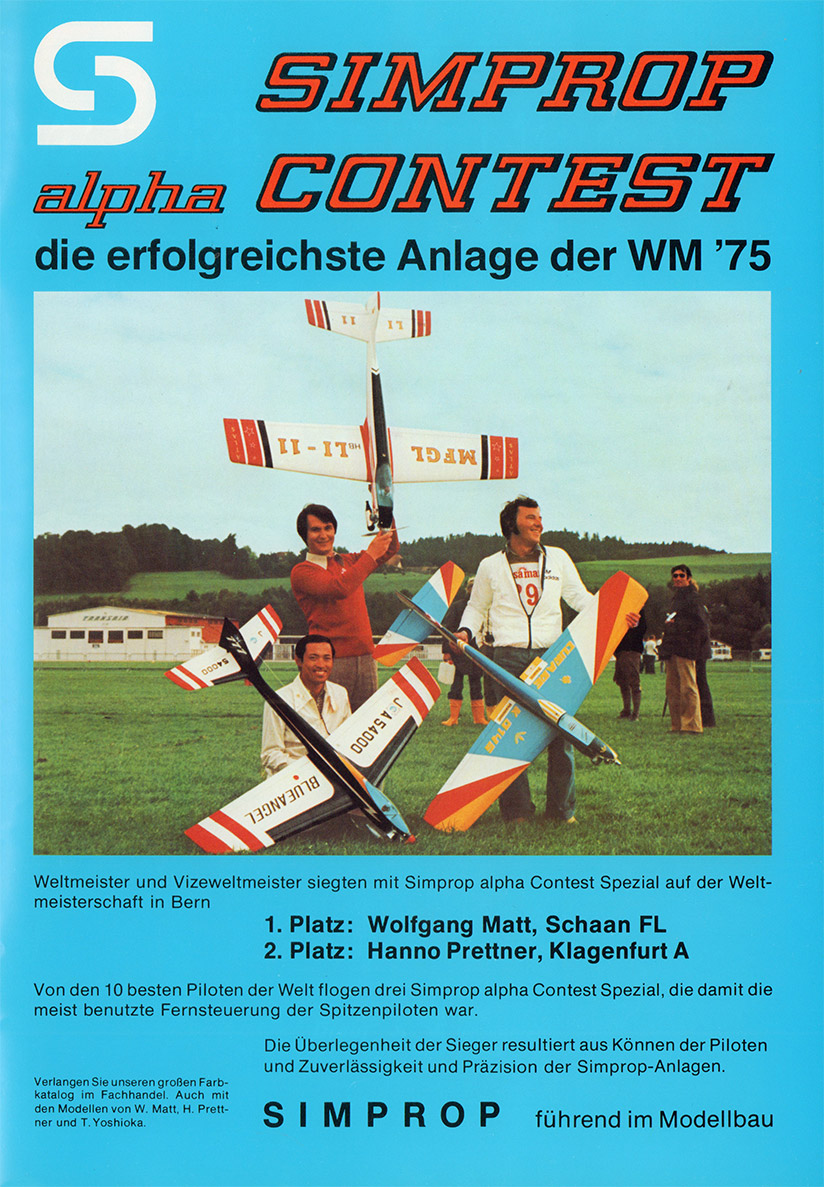
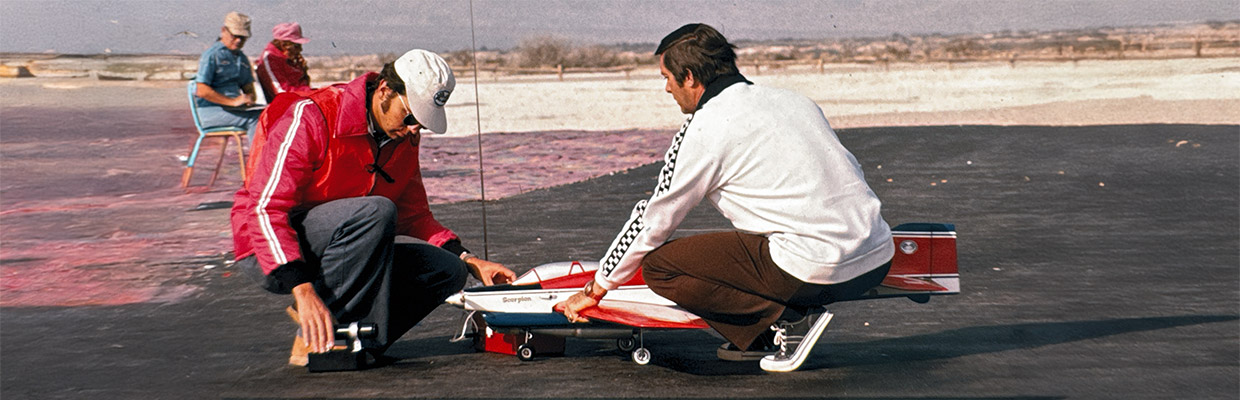
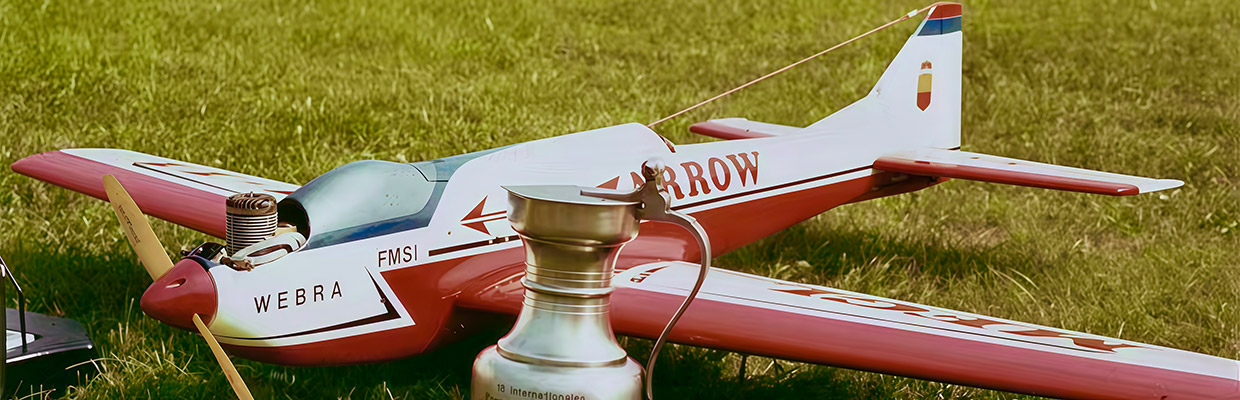
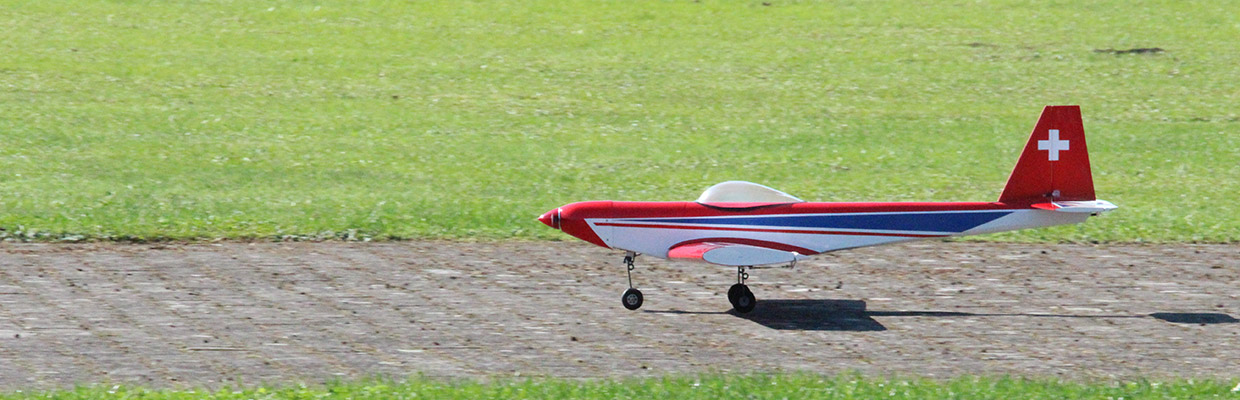
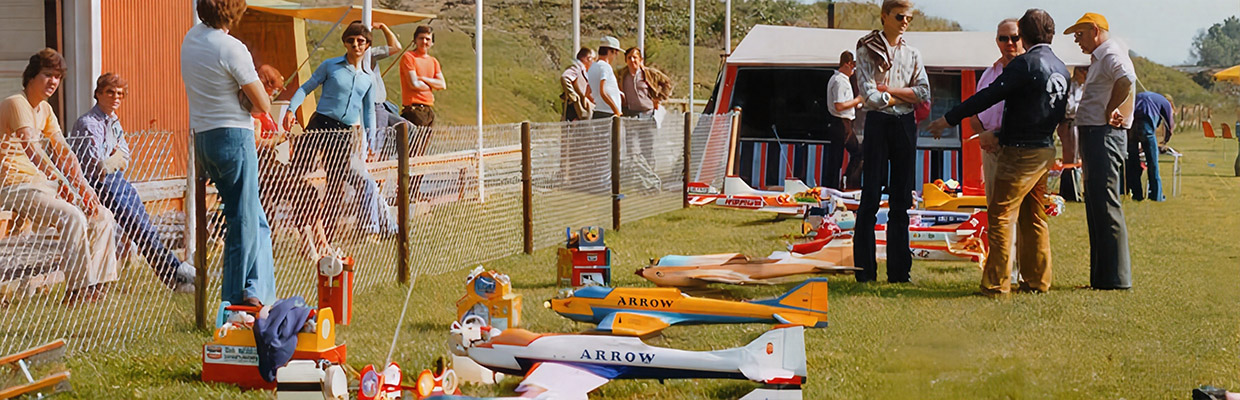
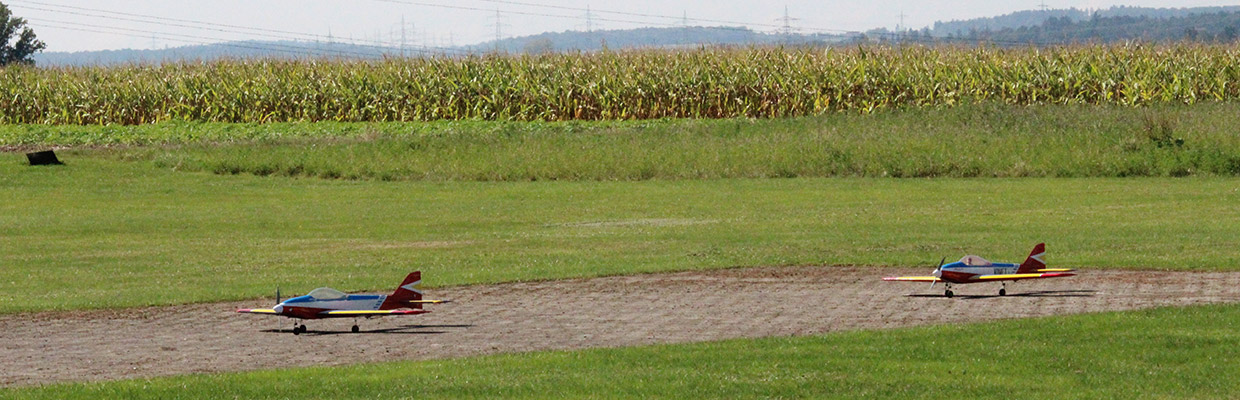
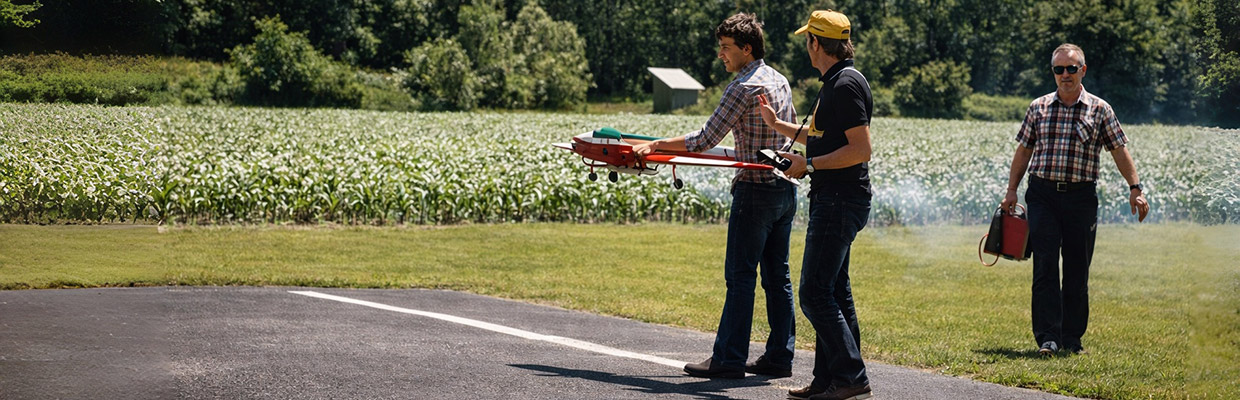
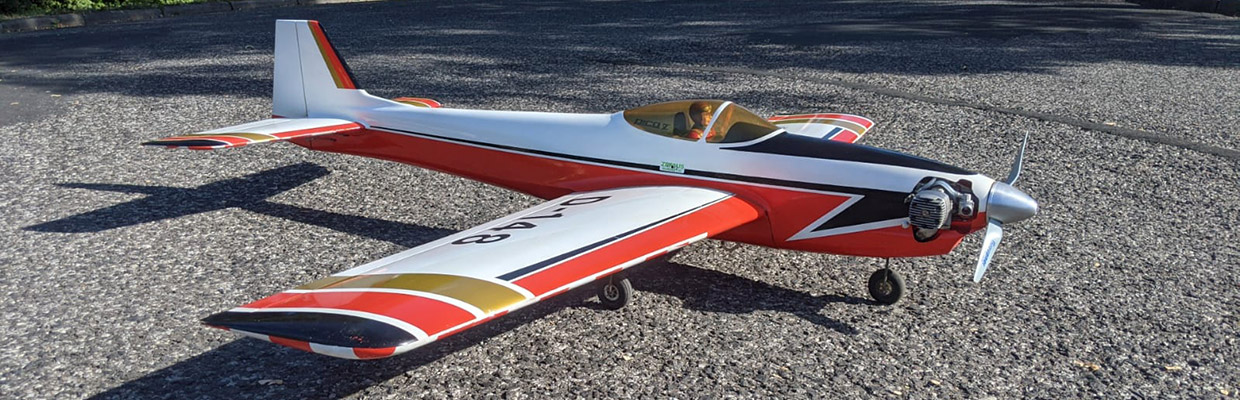
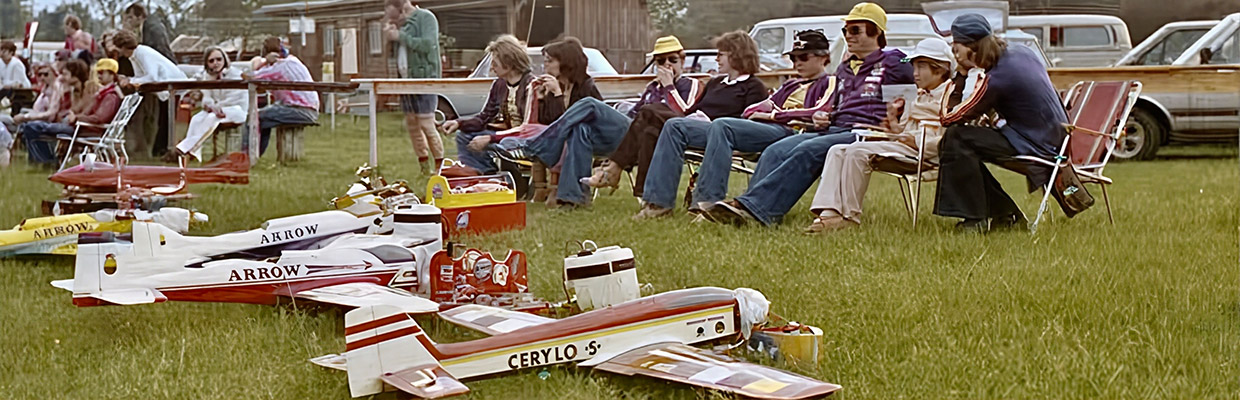
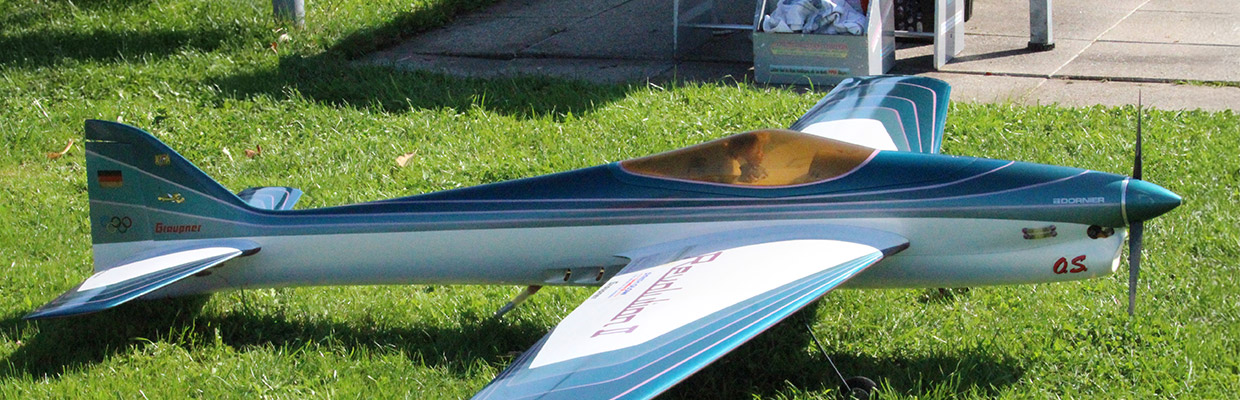
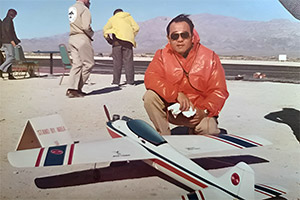
In 1974, Bill Bennett, president of the Circus Circus Group in Las Vegas, launched the very first competition between the best F3A pilots of the time. The world’s best pilots were invited by the hotel. For the first time ever, prize money was offered. The event was named the Tournament of Champions, or TOC for short. Full content is available to paid subscribers only. Support independent journalism by subscribing today.
Continue readingCategory: Topnews
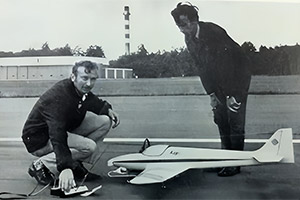
Wolfgang Kosche`s KOGI
Today, I would like to introduce you to the aerobatic model of the 1972 German F3A Aerobatic Champion Wolfgang Kosche. The model was called ‘KOGI’. KOGI stands for ‘Kosche-Gilik’, the abbreviations of Wolfgang Kosche and Erich Gilik. Full content is available to paid subscribers only. Support independent journalism by subscribing today.
Continue reading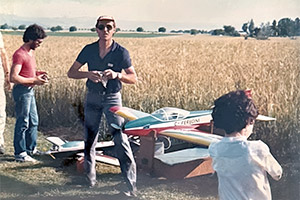
Nachruf F3A Pilot Sergio Perugini
Andrea Perugini, son of former Italian F3A pilot Sergiu Perugini, contacted me a few days ago and sadly informed me that his father had passed away on 16 November 2025 at the ripe old age of 91. Full content is available to paid subscribers only. Support independent journalism by subscribing today.
Continue reading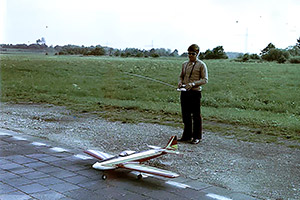
Mephisto
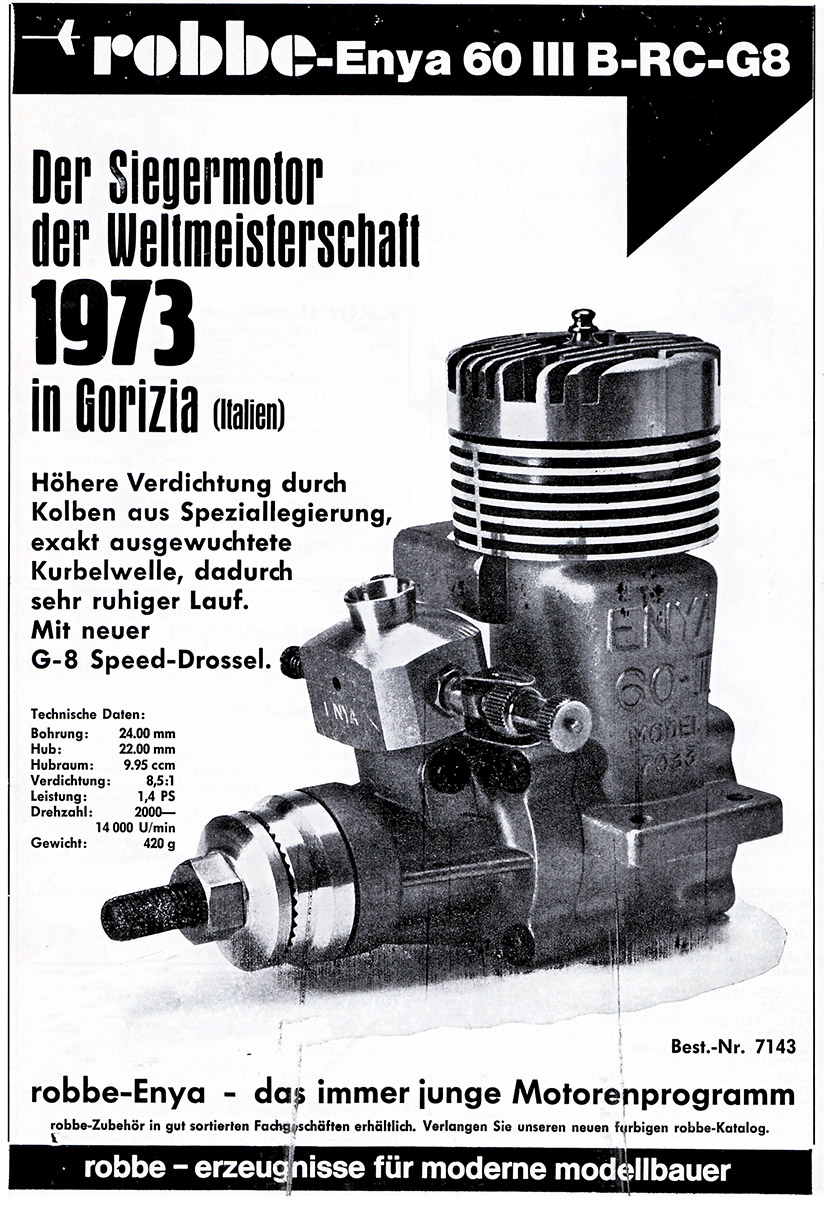
Harald Neckar, multiple Bavarian and German champion in model aerobatics in the 1970s, qualified for the first time in 1973 to participate in the Model Aerobatics World Championship in Gorizia, Italy. Full content is available to paid subscribers only. Support independent journalism by subscribing today.
Continue reading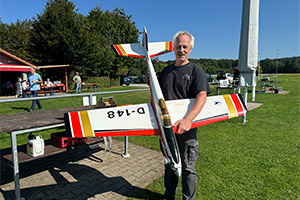
Franz Mayr’ s Pico 5
Franz Mayr from Augsburg was a top German F3A pilot in the 1980s. He designed and built his own F3A aerobatic aircraft back in 1973. He called it PICO. Full content is available to paid subscribers only. Support independent journalism by subscribing today.
Continue reading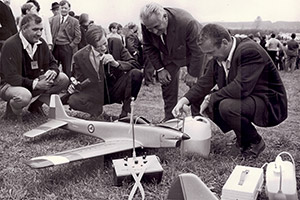
One of the German legends, Karl Blauhorn
Here are photos from the early days of RC motorised flight – Munich legend Karl Blauhorn. In the early 1960s, the Munich model flying club IFM München was one of the first model flying clubs in Germany. Full content is available to paid subscribers only. Support independent journalism by subscribing today.
Continue reading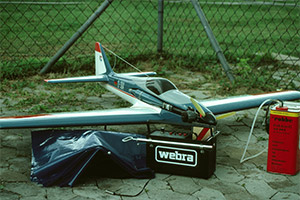
Guenter Hoppe`s Sultan 5
Guenter Hoppe qualified for his second F3A World Championship in Springfield in 1977. To do so, he needed a new competition aircraft. No sooner said than done, together with his mate. His Sultan aerobatic models, which he had used until then, served as the basis. They built a prototype and then produced a mould. Full content is available to paid subscribers only. Support independent journalism by subscribing today.
Continue reading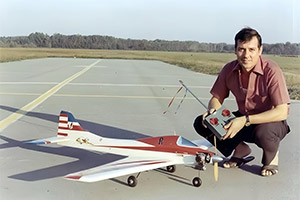
Benito Bertolani`s Settebello
Benito Bertolani took part in the Italian Aerobatic Championships for the first time in 1970 in Bologna with the ‘SETTEBELLO’, which he designed and built himself. He immediately took first place in this championship. Full content is available to paid subscribers only. Support independent journalism by subscribing today.
Continue reading
Dick van Mourik’s enlarged Mäxi
In recent years, I have enjoyed the process of successfully converting several “old-school” designs into the 21st century. However, it was more or less by chance that I came across a report on the German RC Network site in 2022 about a “Mäxi” construction project to support the local youth. Full content is available to paid subscribers only. Support independent journalism by subscribing today.
Continue reading
Marabu Trainer
Finally, I present the Giezendanners’ aerobatic trainer design. There are two aircrafts in this new replica series: one is flown by Urs Leodolter, and the other is flown by me. After winning the F3A World Championship title in 1969 in Lemwerder/Bremen, Bruno Giezendanner and his brother Emil decided to develop and build a Marabu trainer. Full content is available to paid subscribers only. Support independent journalism by subscribing today.
Continue readingMagazines

Schmid`s R/C Collection
-
 Micro-Avionics
Full content is available to paid subscribers only. Support independent journalism by subscribing today.
-
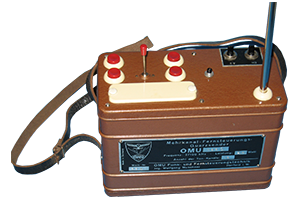 Omu
Omu
Full content is available to paid subscribers only. Support independent journalism by subscribing today.
-
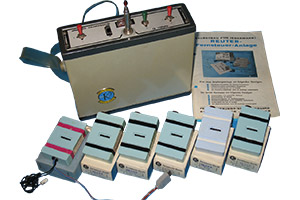 Reuter
Full content is available to paid subscribers only. Support independent journalism by subscribing today.
-
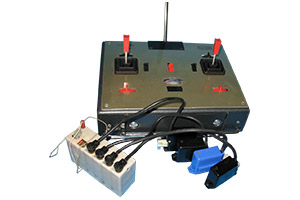 Metz
Metz
Full content is available to paid subscribers only. Support independent journalism by subscribing today.
Associations


Business Friends





Recent Posts
-
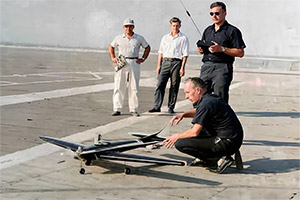 Ed Kazmirski – the legendary pilot
Ein halbes Jahrhundert später sprechen Modellbauer überall auf der Welt noch immer vom Taurus und von Kazmirskis anderen Konstruktionen. Wenn … Read more
-
 Stuyvesant Squadron story
In the early 80s, the synchronized flight squadron suddenly appeared. Sponsored by the tobacco company Reemtsma. The Stuyvesant squadron. It … Read more
-
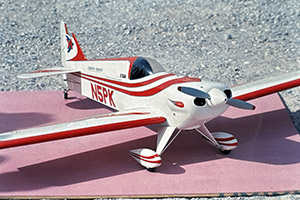 Phil Kraft`s Super Fli
When processing the photos of the T.O.C. 1976, Phil Kraft’s beautiful aerobatic model ‘Super Fli’ immediately caught my eye. Years … Read more
-
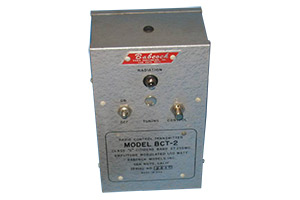 Babcock
Full content is available to paid subscribers only. Support independent journalism by subscribing today.
-
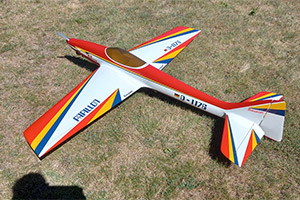 F3A Aerobatic plane Papillion
This F3A model Papillon was developed in 1981 by the German F.Grützmacher and manufactured in small series. It could be … Read more