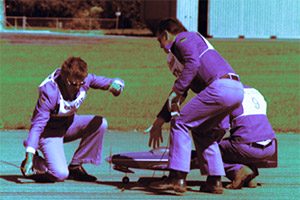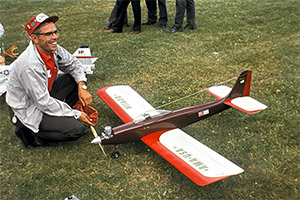
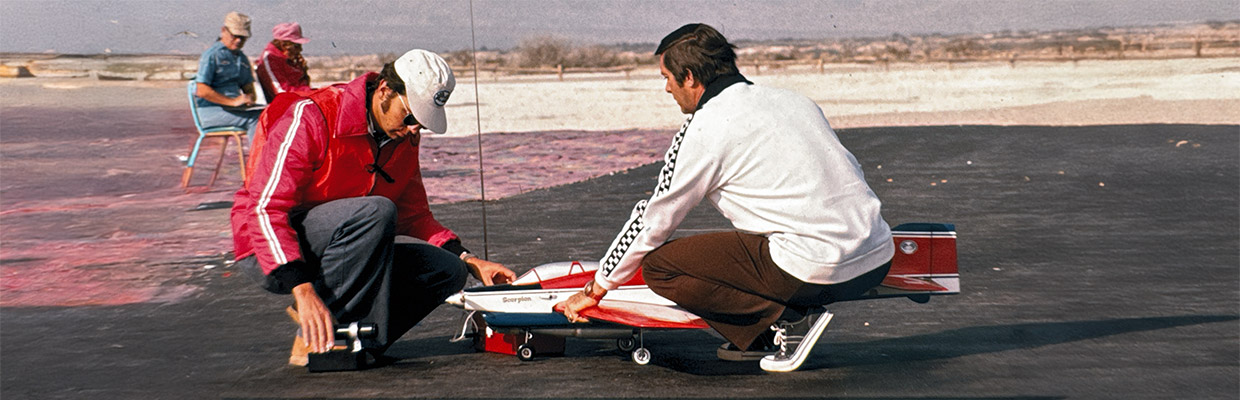
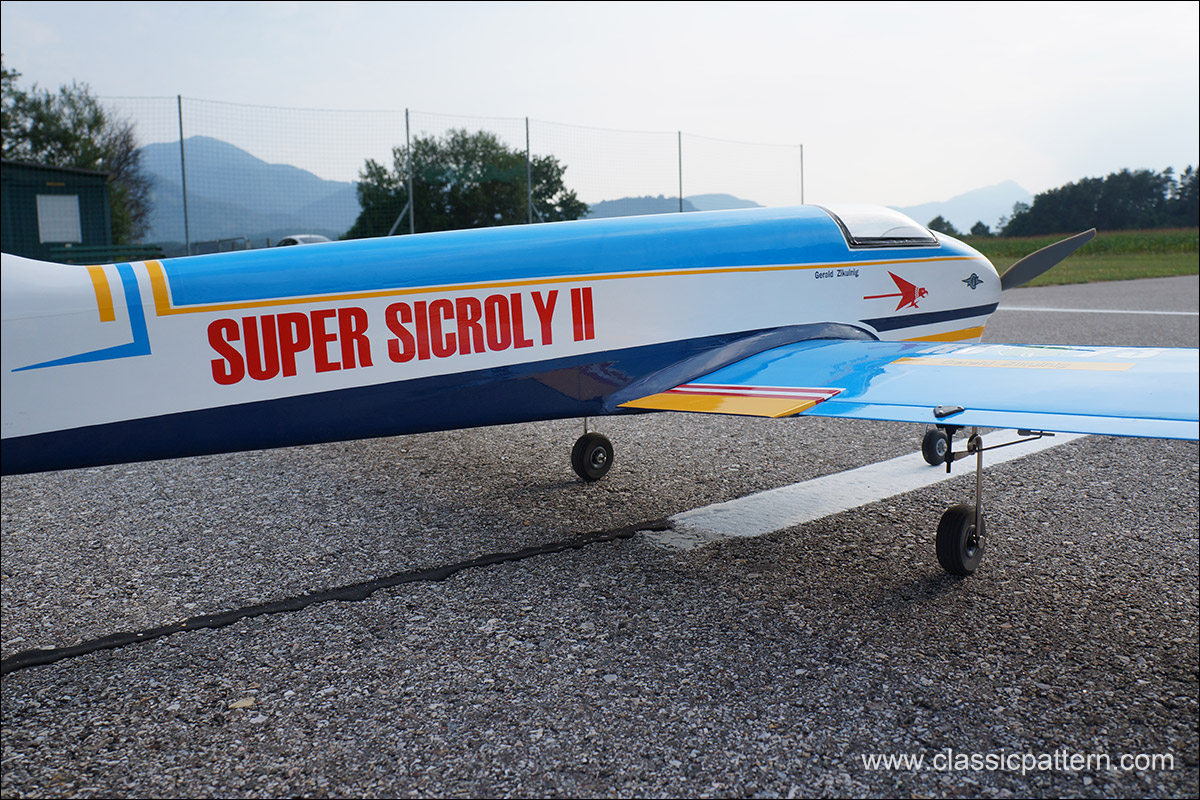
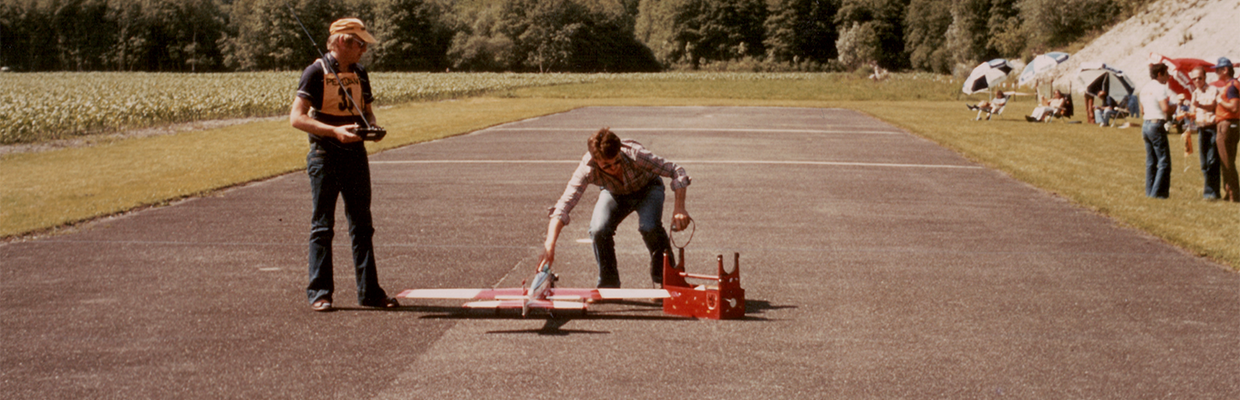
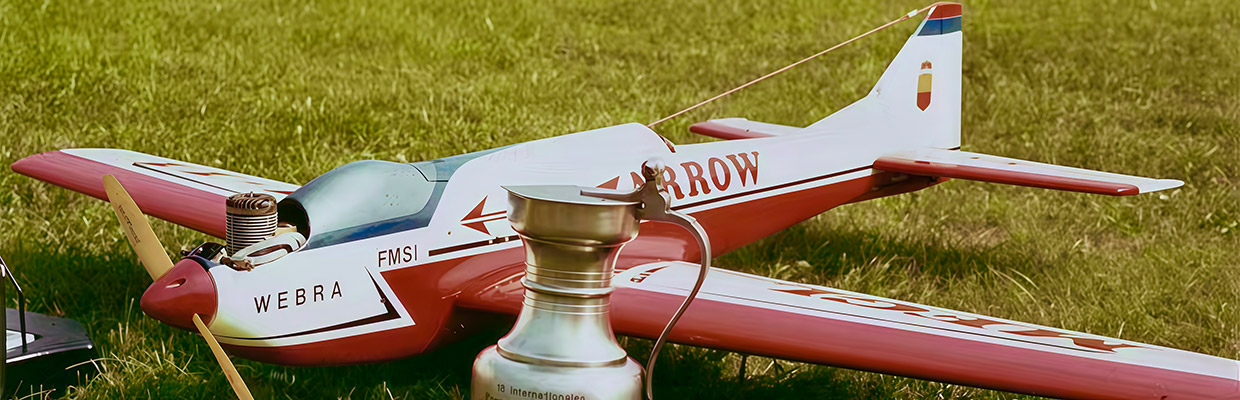
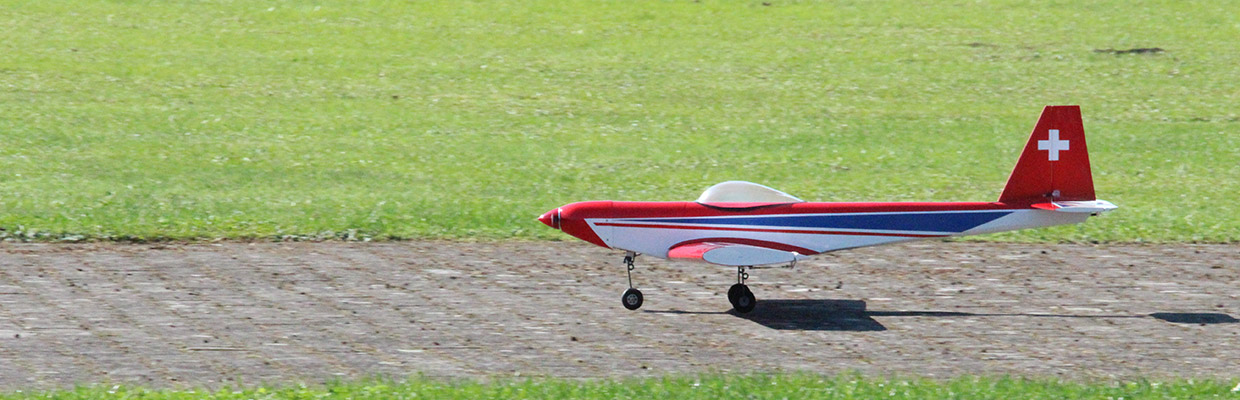
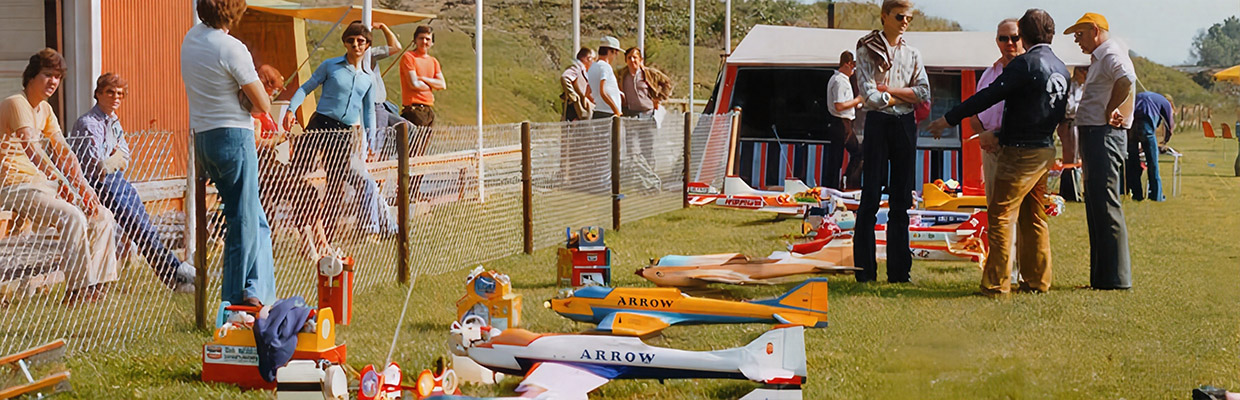
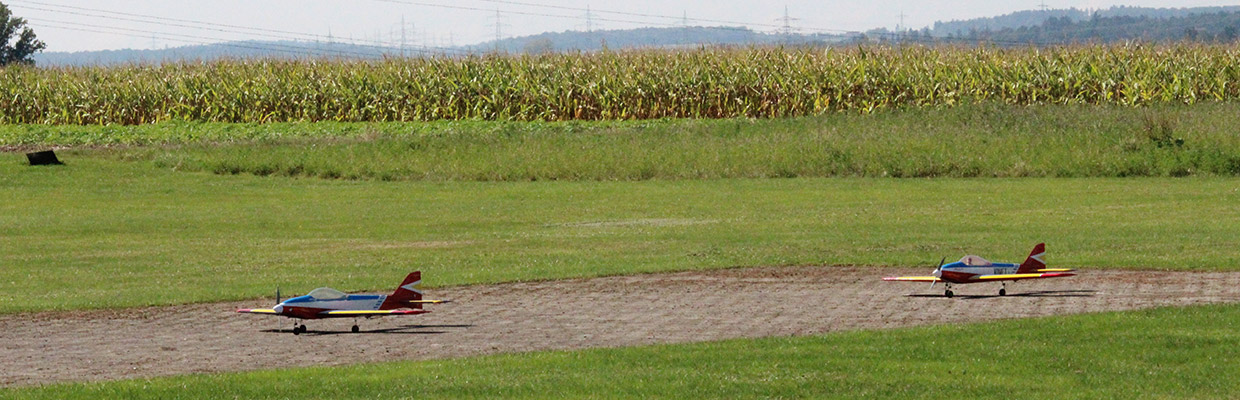
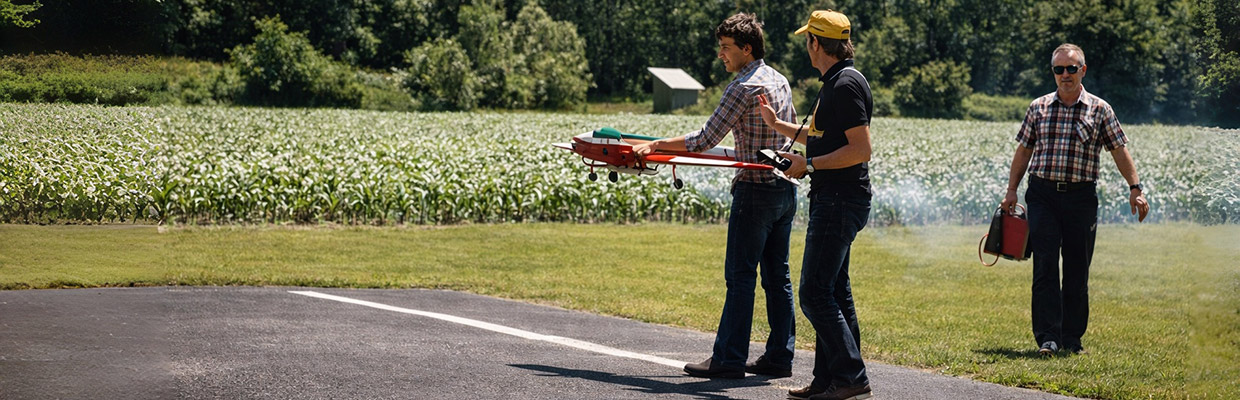
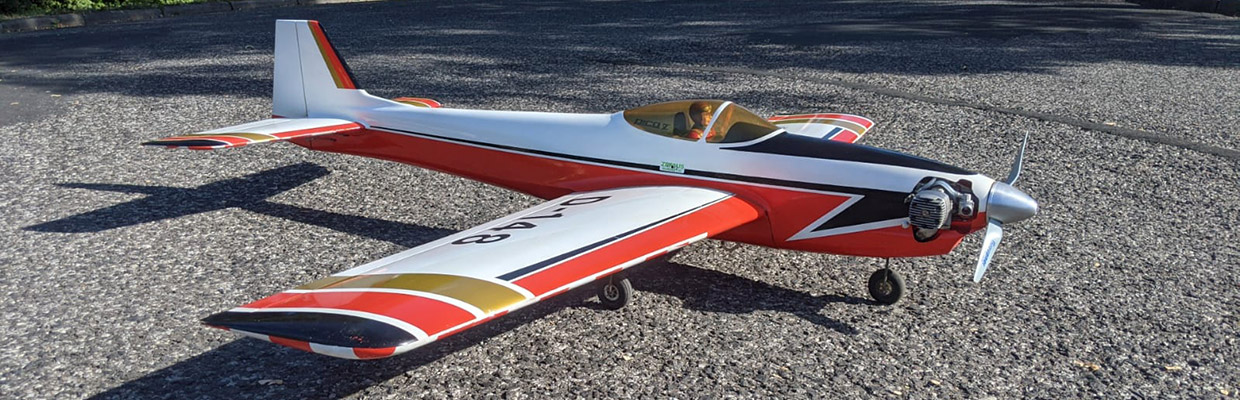
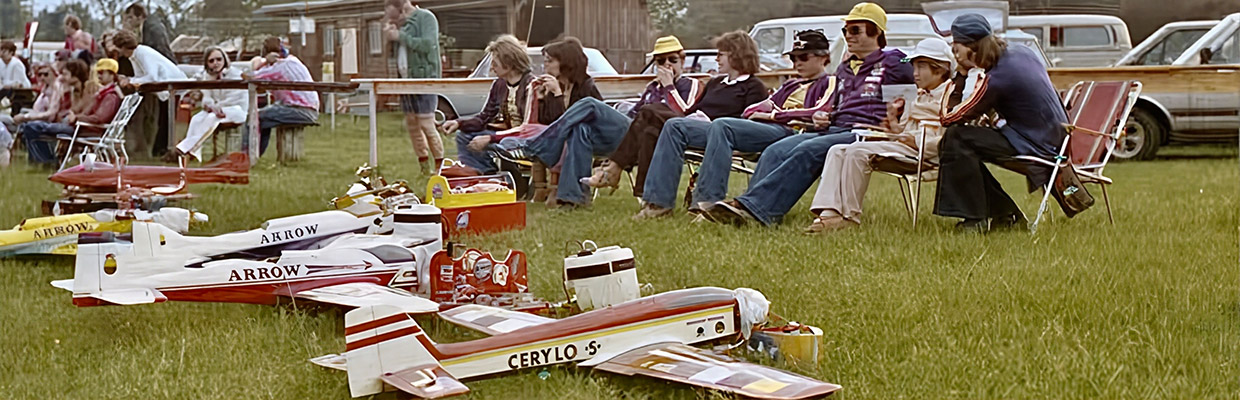
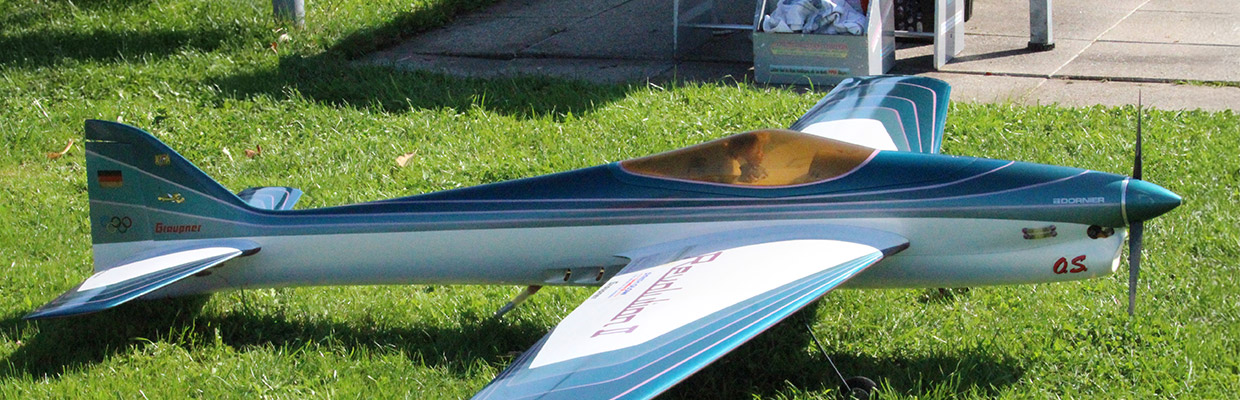
Wir schreiben das Jahr 1984. Bill Bennet hatte wieder gerufen. Zum achten mal gab es wieder das Tournament of Champions in Las Vegas / USA. Alle namhaften Piloten eilten dort hin. Selbstverständlich hatte jeder ein neues wettkampf fähige Flugzeug mitgebracht.
Wie bei unseren anderen TOC Berichten, konnten wir auf den original Artikel aus dem Modell Airplane News zurückgreifen. Dank an chief editor Debra Cleghorn.

Hier der Bericht:
This eighth Gran Prix of R/C was the most exciting ever!
The city of glitter and high stakes, Las Vegas, again saw the return of select R/ C pilots for the eighth Tournament of Champions. The TOC is the richest and undoubtedly the premier event of model aviation enthusiasts. There are probably more pilots than can be counted who would give an eye-tooth for a shot at it.

The TOC was originally organized in 1974 and is the brainchild of Bill Bennett and Model Airplane News. The meet’s concept was to bring together champions of every nation to compete in head-to-head competition of precision aerobatics. The judges were no longer people from the model aircraft field. At least half of them were pilots and judges in full-scale aerobatics.

Since its beginnings, the TOC has evolved from competition with the standard pattern ship flying AMA and FAI maneuvers, to scale ships flying the sophisticated Aresti aerobatics schedule. lt has constituted a full circle of events that has brought R/ C to the closest thing to full-scale aerobatics yet.

This year’s TOC was probably the toughest and most grueling test to date. In the past it was rather simple to make up a schedule of maneuvers from the AMA or FAI book andgo out to fly. This year, the pilots had no such luck.

Some six months ago the invited pilots were mailed a schedule of maneuvers called the “known schedule,” but each pilot was also expected to make at least two maneuver schedules derived from the Aresti book of full-scale aerobatics and from their own wit. The first of these would be the “free-style” schedule.

The second would be a schedule designed to fill four minutes of aerobatics with anything the pilot dared to perform, appropriately called the “four-minutefree-style.” This schedule would be judged by four factors: originality, versatility, harmony and rhythm, and execution.

This was to be no piece of cake. For the first time pilots were to perform exactly like their full-scale counterparts in

three out of four events. If you think that’s tough, then think of this: 1984 was to be the year of biplanes. To promote the use of bipes, any contestant entering a two-winged bird was to receive a 10% bonus score an every round!

Action with the pilots began as early as two weeks before the opening day. One of the first to arrive was young Steve Stricker from Baltimore, Maryland. Gunter Hoppe arrived around the same time and also went about his work at the remote dry lake bed outside of the City.

By November 5 nearly all the contestants had arrived and were deep in practice. lt quickly became apparent that this contest was going to be a monoplane-versus-biplane contest.
Only 8 of the two-winged bipes were present, with the rest of the field flying a combination of Laser;, Super Stars. Chipmunks, and a few miscellaneous others.

lt was generally true that bipes could not perform as cleanly as the slick Lasers, but with the 10% bonus allowed to the bipes, the

Monoplanes would have more than their hands full attempting to make up that 10% deficit.

Action began on Wednesday, November 7, with official practice and aircraft qualifying.

The ax fell early on Hanno Prettner, when his bipe was disqualified due to failure to meet the stringent scale outline and deviation rules. His back-up biplane was no better and Hanno, seven-time TOC champion, was out!

For the rest of the field, this meant a bit less competition on one hand, and also a bit more. First international alternate, Franz Mayr of West Germany, took Hanno’s place in the line-up and this guy is no slug.

Franz practiced endlessly with Hoppe on the lake beds, and was looking sharp entering the meet.

On Thursday, Old Man Weather acted up and produced a classic desert wind storm, which unfortunately wiped out the first day of competition. Friday morning was good. The wind had settled down and the race was on. The pilots had been given their unknown maneuver schedule on Wednesday night and no practice was allowed on these.

Mayr was in a particularly bad position as he had not received his unknown schedule until Thursday night. An all-night session of shadow-practice was all he could get.

At the end of the first round, the unknown schedule, Dean Koger had the lead over Wolfgang Matt and Ivan Kristensen. Koger was flying a slick-looking Skybolt and he used it with authority. Matt, flying his Super Star, was looking very exact. Kristensen was flying a Laser and displayed superb control.

These three were followed by Werner Schweiker of Germany, John Britt of the U.S., Giichi Naruke of Japan, and Dave Wilson, Steve Stricker, Tony Frakowiak, and Steve Helms, all of the U.S.

The first of the known schedules was next. Steve Rojecki, a first-time TOC competitor flying a Reed Falcon, burned up the sky by scoring a massive 200-point lead over second high scoring Steve Stricker. Kristensen held tight in third followed by Matt, Helms, Brown, Schweiker, Akiba, Bonetti, and Frakowiak.

The next task was the free-style schedule. This is produced by the pilots from the Aresti system of aerobatic maneuvers and is submitted to the contest committee for approval some 60 days prior to the contest. lt is 23 maneuvers long and can score a maximum of 700 points with “K” factors included.

Tony Frakowiak came through tops in score. Tony was flying a Laser 200 and put together a nicely coordinated flight. Tony was followed by Rojecki, Kristensen, Schweiker, Koger, Akiba, Hoppe, Naruke, and Matt.

We then had three separate schedules flown and three different sets of scores. The contest management had decided that the pilots would fly two rounds of the three schedules with round two having schedule number two of the unknown maneuvers in place of the first unknown schedule. The top scores from the two rounds would be used to determine the finalists.

Next came round two, the second of the unknown schedules. Now the un- known schedules were not too difficult in terms of the maneuvers themselves, but if the pilot had never performed the sequence before, he had quite a task before him. The pilots were given the schedules an Friday evening and most of the pilots sat in their motel rooms using toy models to shadow-practice with.

The second round opened with Ivan Kristensen out in front. His Laser was working well and he was confident.

Stricker picked up the pace with second, followed by Hoppe, Brown, Frakowiak, Matt, Koger, Rojecki, Schweiker, and Mayr. In this round most of the pilots improved over round one, so this round’s score would count for them toward the finals. Only three pilots failed to improve, one due to engine problems.

The second round of the known schedule was up and, again, Rojecki and Stricker were leading the pack. Both improved their scores over the first round, and Stricker was a scant 1.55 points away. Matt pulled in at third, bettering his first-round score, and he was followed by Hoppe, Frakowiak, Schweiker, Helms, Brown, Kristensen, and Koger.

The last schedule of round two was the do-or-die round for most. A free-style round was scheduled and Rojecki did it again. He improved on this round some 375 points to make good the second round flight. Kristensen proved that the bipes couldn’t get to him easily and placed second.

Stricker put his Stearman into third place. Hoppe placed fourth with the Super Star and Matt followed with another Super Star. After the final tally, the die was set for the finals. Steve Stricker was in control and leading the five finalists with his Stearman.

Rojecki was a close second with the Reed Falcon. Kristensen had third with the Laser 200, followed by Matt and Hoppe, both flying Super Stars. *Matt, Kristensen, and Hoype are all veterans of previous TOCs, as well as having been in the top five before. Stricker and Rojecki were in the top five for the first time. Not surprisingly, bipes held first and second place.

At the banquet on Saturday evening, the awards were given out for places sixth through twenty. Rounding out the top ten was 6. Frakowiak, 7. Schweiker, 8.Koger, 9. Brown, and 10. Naruke. Of the top ten Koger was the only other pilot with a biplane, other than Rojecki and Stricker.

Brown and Frakowiak flew Lasers, Schweiker flew an original YAK-55 monoplane, and Naruke flew an immaculate Chipmunk. Naruke’s Chipmunk was typical of the fine finish applied to the planes from Japan. In fact, the Japanese took home the best finish award with Yoshioka Akiba the recipient. That was worth a man-sized trophy and $5,000.

The dinner that night was great and afterward the judges handed over two more unknown schedules to the five pilots and the days of college cramming days of alive again.

Sunday saw the best weather of the entire meet, with gorgeous skies and no wind. Rojecki started out on a blistering pace in the first known schedule. He scored a high 4,425.88. Ivan Kristensen came in second with 4,223.8, with Matt at 4,214.9, Stricker with 4,092.77, and, Hoppe ending up with a disappointing 2,771.3.

The first unknown schedule saw Stricker set the pace with 4,251.99. The big Stearman was flying quite realistically, and the judges acknowledged this with their scoring. Matt had second with 4,002.00, Rojecki third with 3,990.44, Kristensen with 3,946.9 and Hoppe at 3,585.9.

Again, as in the preliminaries, the pilots would fly two rounds with the best of two rounds to count. There was a lot more to come.
The free-style schedule was next and Rojecki again topped the group with 6,560.4. His original Reed Falcon was flying as steady as an airborne straight edge. Stricker nabbed second with a score of 6,230.4, followed by Kristensen at 6,214.6, Matt with 6,098.8 and Hoppe with 5,517.0.

The next schedule was probably the most eye-opening one ever seen at the TOC, the four-minute free-style event. This is so me what akin to a barn-storming event, as anything goes for a full four minutes. Stricker flew first and put on a most spectacular flight.

He entered the acrobatic box on a left-side knife-edge and continued this through a 360-degree circle. A series of breath-taking snaps, spins, a 16-point precision roll, followed by a continuously rolling Cuban 8 was just flat-out entertaining.

His finale was a fantastic torque roll. Bringing his bipe to vertical, the ship came to a full stall while rolling, and slid on the tail while continuing the roll for a good 30-foot drop.
The flight earned 1,978 points.

Rojecki was next, and his performance was also very original and exciting. He put the Reed Falcon through dizzying spins and reverse spins, reverse Avalanche maneuvers, and a never-before-seen knife-edge loop.
The Falcon did the loop as cleanly and as round as a normal pattern ship could do on a wing. The spectators stood in utter amazement as the Falcon pulled out at the same altitude she entered.
To teil you the truth, after watching these two performances, the final three flights by the monoplanes were slightly ho-hum. Kristensen woke us up with a nice six-sided loop with half-rolls on each side. Comparatively, Matt and Hoppe were quite conservative in their flights.

In the time between rounds, there were some nice demo flights. The Kalt Helicopter flight team performed some exciting flights that displayed the excellent handling characteristics of the Kalt Baron helicopters. One such demo included two choppers hovering one on top of the other, with one chopper inverted.

One of the highlights was the daily flight demo by the Christen Eagles Biplane Demo Team. Flying their full-scale Eagle Bipes, they wowed the crowd by performing their full array of airshow maneuvers within the confines of the miniature TOC field.
Benito Bertolani of Italy also performed a notable flight demo on Sunday. Taking his Weeks Special bipe, he gave a special definition to the meaning of the word “hot-dogger.”

The resumption of round two began with another known schedule. Stricker took the lead in this round, bettering his first round score some 300-plus points with a scorching 4,426.00. Rojecki hung in there, unable to better his first round with a 4,394.22.
Kristensen edged out Matt by a mere .3 of a point, scoring 4,235.6 to Matt’s 4,235.3. Hoppe got in a respectable round with 3,983.00.
Round two of the unknown schedule was flown next, and Rojecki improved his round one score by getting 4,263.6 on the second time around. Stricker had to settle for his first round score, as his second round only managed 4,075.22. Kristensen improved, getting 4,014.7, and Matt trailed with 3,973.6.
Matt would have to use his first round score. Hoppe flew a better second round, but just couldn’t find enough in his Super Star to catch the bipes.
Round two of the free-style schedule saw Rojecki again burn the field with 6,546.77. However, it wasn’t enough to better his outstanding first round score. Stricker also failed to improve his first round score. Only Hoppe improved his first round score, earning 5,271.4 but he still had little chance of finishing higher than fifth.
The last flights were the four-minute free-style schedule. If crowd appeal and applause gave any hint, Stricker got the most. Rojecki also got a notable amount and only Ivan Kristensen received any more “oohs” and “ahhs” from the few thousand spectators.
The final scores were not posted so no one knew the order of Finish until Tony Bonetti, representing Bill Bennett of Circus-Circus, gave out the trophies. Steve Rojecki, full-time Air Force F-15 pilot, was the winner of the ’84 TOC. He earned a fat $30,000 and was assisted through the whole meet by Debi Mallory.
His Reed Falcon, a South African derived bipe, was powered by a Chapman Special Tartan Twin and guided by a Futaba PCM radio. Construction was balsa, ply and fiberglass, and the ship was a beautiful performer in the hands of Rojecki.
Second place went to the youngest pilot of the meet, Steve Stricker. His Stearman bipe was powered by a Sachs-Dolmar on ignition, using a gas/ oil mix.

Futaba PCM provided the necessary guidance. Stricker was assisted by Chris Lash who co-designed the ship. The effort by Stricker and Lash was worth $15,000.
Ivan Kristensen checked in at third. A Super Tartan Twin powered his Laser and guidance chores were handled by Futaba PCM. Ivan earned a slick $10,000. Chuck Shade was his calling companion. Wolfgang Matt nabbed fourth place, worth $6,500. A Webra Bully pulled his Super Star and he used a Webra FM S1 radio.
Gunter Hoppe finished in fifth place and his effort was worth $6,000. A Webra Bully and a Webra Expert 9 completed his package.

In retrospect, this year’s tournament proved to be the toughest, which showed the versatility and professionalism of the pilots. They handled the varied flight schedules with amazing precision and grace, despite having never flown the unknown schedules.
Even the judges, their numbers graced with the likes of Lamar Steen, designer of the full-size Skybolt, smiling “Doc” Edwards, former Masters champ, and a host of international figures from both the R/C and full-scale world, agreed that this contest was as close as you could get to the real thing.
As for the biplanes? They finished one and two, but not without a fight from the monoplanes. As the scores show, the bipes only managed to get three spots in the top ten, with the rest being monoplanes. No doubt the 10% bonus got theme there, but, considering the odds, the monoplanes didn’t give up much to the bipes.
Once again the TOC has become a trend setter. It has proved that a bipe and a monoplane of quarter-scale size can execute precision aerobatics with exacting performance. And it has proved that the hard work and determination can pay off in prestige and money. In this respect, all the participants are winners, on top of being champions in their own right.
If all goes well, we should be ready to see the best again in 1986. I’m already looking forward to the ninth Tournament of Champions. See you there.
Text: Mike Lee (MAN)